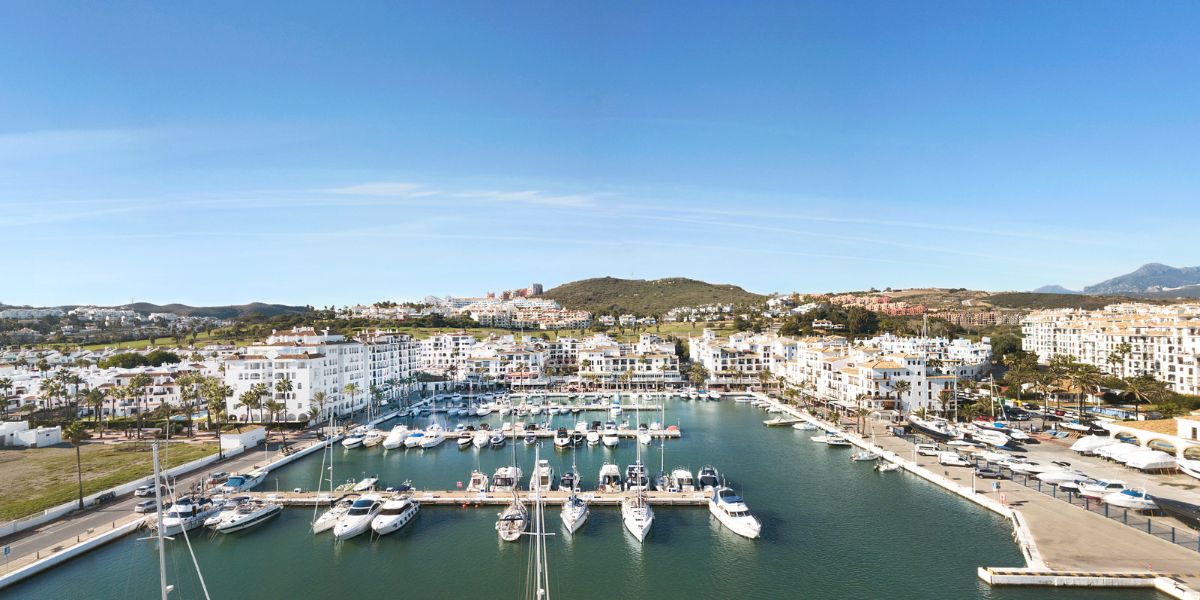
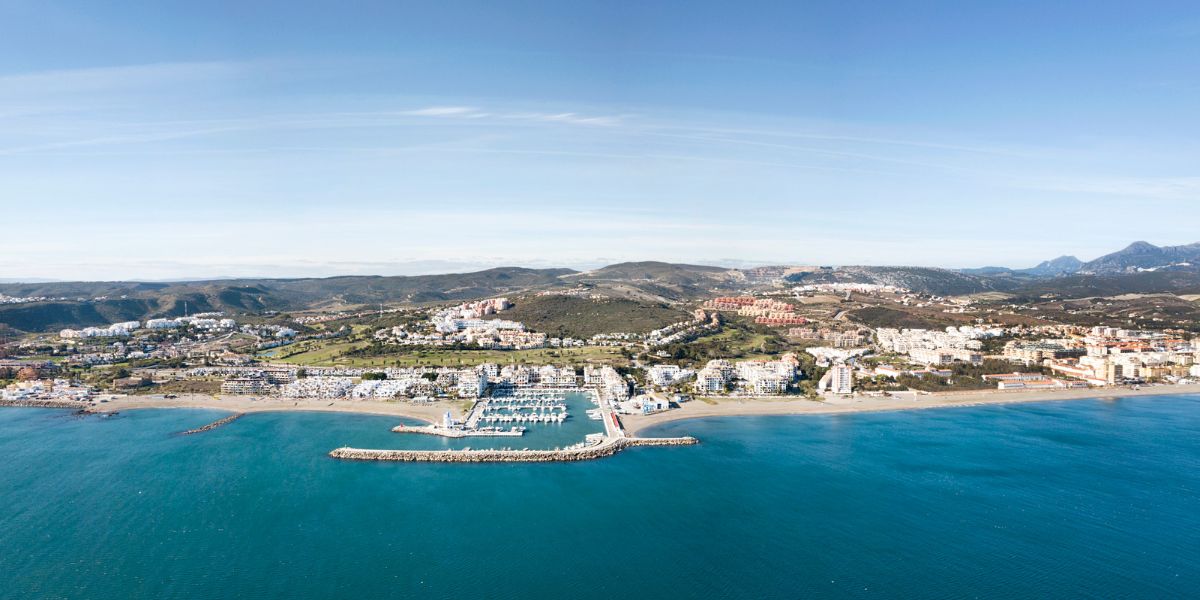
Manilva is a village in the inland area of Málaga, Spain. It is surrounded by vineyards, but the municipality also includes the coastal town of Sabinillas and the area around Castillo de la Duquesa. It has a marina and all kinds of residential developments for people to enjoy the area, whether they live here permanently or come on holiday.
In this guide, we want to tell you everything about Manilva Costa del Sol: transport, beaches, activities, amenities and even whether it is worth living in a place like this permanently, in a particular property or home.
Where is Manilva in Spain?
Manilva is in the province of Málaga, in Andalusia, southern Spain, in an area known as the Costa del Sol. More specifically, it lies in the south-western corner of the province and forms a link between the western Costa del Sol and the Campo de Gibraltar. According to its own town council , the municipality is 97 kilometres from Málaga city and 35 kilometres from Gibraltar
The current population is 18,818, spread across three main settlements: Manilva, Sabinillas and El Castillo, which may be near the seafront promenade, the golf course or other parts of the municipality.
Weather forecast Manilva Spain
The Town Council puts the average annual temperature at around 18 °C. To organise a visit, use the AEMET weather forecast for Manilva. The website provides a seven-day forecast and hourly details.
Manilva has a mild Mediterranean climate. Summers are short, dry and hot (August has average highs of around 29 °C), while winters are long, somewhat rainy (average highs of 15 °C in January) and cool (lows of around 9 °C). Exceptionally, there may be colder or hotter days, but temperatures rarely drop below 5 °C or exceed 33 °C. Rainfall is concentrated in autumn and winter, with December being the wettest month (±75 mm).
Map of Manilva Costa del Sol: the different areas
On a map Manilva Spain, you will find different residential areas that also stand out for their tourist attractions.
Its most important locations are:
| Area | What makes it distinctive | What to check during your visit |
|---|---|---|
| Manilva village | Inland village, heritage and a wine-growing tradition. | The daily journey to the coast and the services you would use. |
| San Luis de Sabinillas | Urban beach and seafront promenade, with nearby shops and businesses. | Walking distance to your usual amenities and parking. |
| Puerto de la Duquesa | Marina and a range of restaurants around the harbour. | Street atmosphere, the property’s orientation and noise at different times of day. |
| El Castillo de la Duquesa | Historic fortress and direct access to the coastline. | Access to the beach and routes to Sabinillas and the port. |
| Los Hidalgos | Residential area near La Duquesa golf course, with apartments, villas and pedestrian access towards El Castillo. | The actual distance to the beach and port, as well as pedestrian access. |
| Bahía de las Rocas | Homes in elevated positions, with views from certain properties. | Slopes, journeys by car and access roads within the residential development. |
The municipality is made up of several settlements and residential developments. The old town, or Manilva village, is a hilltop settlement with whitewashed streets, the Church of Santa Ana and a small, local atmosphere. On the coast are the districts of San Luis de Sabinillas (often simply called “Sabinillas”) and Castillo de la Duquesa (around the castle and El Castillo beach). Between them lies Puerto de la Duquesa, a small marina with berths, a seafront promenade and restaurants. There is also Los Hidalgos, an elevated residential area above Sabinillas (close to the beach and shops). At the foot of the castle are the beaches and residential developments known as El Castillo and La Chullera; La Chullera is known for its Romanesque tower (Torre de la Chullera) and naturist area. To the west, almost on the border with Cádiz, is Playa de Los Toros (wild and not very crowded). Other neighbourhoods include Bahía de las Rocas (a residential area between Sabinillas and Puerto Duquesa) and scattered settlements inland, although the main centres are those mentioned.
Manilva has a multicultural community. Some 39% of its 18,000 inhabitants are foreign nationals. The most common nationality among them is British (almost 2,300 residents, a third of all foreign nationals), followed by other Europeans (Germans, Dutch, Belgians, etc.) and Moroccans. Many neighbours are therefore permanent international residents. This mix strengthens an international atmosphere, where English, Dutch and German are spoken alongside Spanish, and where British culture is celebrated (markets, events) without losing Andalusian traditions. The “manilva life” combines a peaceful lifestyle with sunshine almost all year round: its warm Mediterranean climate (an annual average of 18°C) and microclimate make an outdoor lifestyle possible.
How to get from Málaga to Manilva Costa del Sol
From Málaga city, you can reach Manilva by following the coast towards Marbella, Estepona and Algeciras. There are two main routes:
- A-7 dual carriageway (free): runs along the Costa del Sol through towns such as Fuengirola, Marbella, San Pedro de Alcántara and Estepona. Continue towards Sabinillas and Manilva.
- AP-7 motorway (toll road): avoids traffic in the Marbella and Estepona area. You can then join the A-7.
If you are going to Manilva village, you will need to turn inland from the coastal road.
Manilva is around 97–100 kilometres by road from Málaga city. The journey by car usually takes approximately an hour and a half.
Are there direct buses from Málaga city to Manilva?
Yes, there are direct connections between Málaga Bus Station and San Luis de Sabinillas, one of Manilva’s main settlements. The journey takes approximately two hours and fifteen minutes.
If you prefer, you can also take a bus to Estepona and then catch a second bus to Sabinillas or Puerto de la Duquesa, although if you want to reach Manilva village you will need to check the direct connection from there carefully or take a taxi.
Can you reach Manilva by train?
Manilva currently has no railway station. The C-1 Cercanías commuter line connects Málaga with Fuengirola, so from there you need to continue the journey by road.
How far is Manilva from Malaga airport?
Manilva is around 90 to 100 kilometres by road from Málaga Airport.
How to get from Manilva to Gibraltar?
The direct route from Manilva to Gibraltar is to take the A-7 dual carriageway by car towards Algeciras and La Línea de la Concepción. Take exit 119 towards La Línea and continue along the N-351/CA-34, following the signs to Gibraltar. You can enter Gibraltar in your own vehicle or walk across from La Línea.
There is also a bus route you can take from Estepona (if you first get there by bus, train or car) to La Línea and then walk into Gibraltar.
Manilva and Gibraltar are approximately 35 kilometres apart.
Manilva Beach Spain: top 3
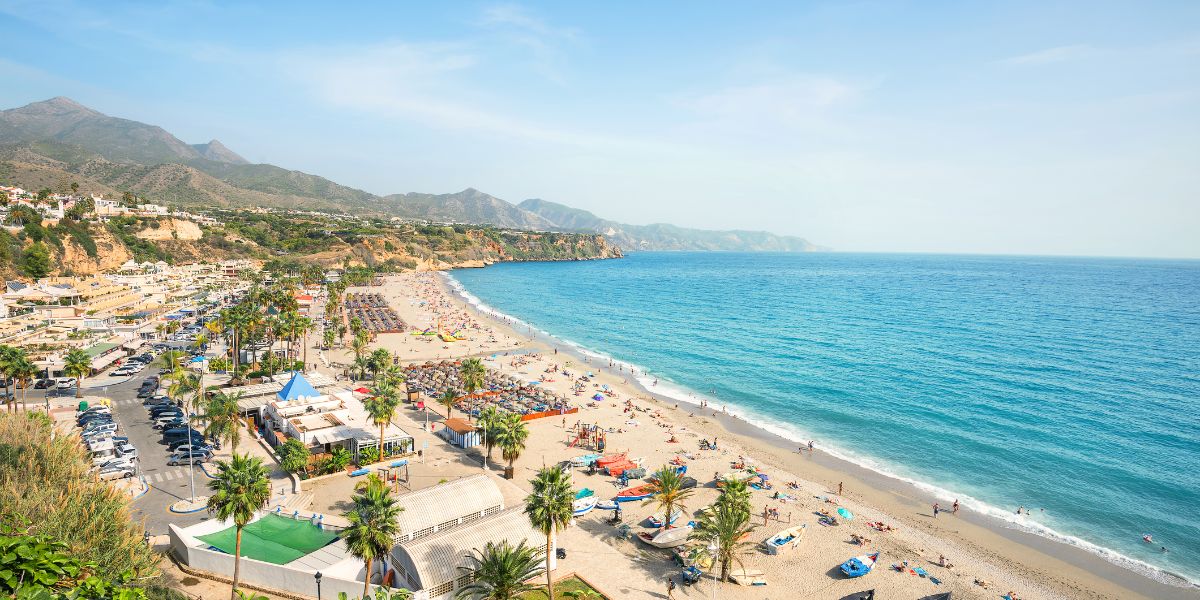
Manilva has more than 8 km of coastline, so you will find several notable beaches. In this guide, we highlight the three main beaches you should not miss.
Sabinillas Beach
Sabinillas Beach is an urban beach with dark sand, approximately 1,700 metres long and easy to reach on foot. It has facilities such as showers, toilets, and sports and children’s areas.
La Duquesa and El Castillo
La Duquesa beach has stretches of sand with restaurants and beach bars around the marina. El Castillo adds the fortress and its small coastal settlement. You can plan a day that includes a walk, a cultural visit and a meal by the sea, rather than spending the whole time on the sand.
Punta Chullera
Punta Chullera stands out for its rocky landscape. It is made up of rocks and gravel, which makes access difficult, but it is absolutely worth the effort.
5 things to do in Manilva
Whether you are visiting Manilva on holiday or already thinking about living here, make sure you add these activities to your calendar:
Visit Castillo de la Duquesa
Castillo de la Duquesa was built in 1767. Its surroundings preserve remains of a Roman settlement linked to the production of salted fish, including elements of a villa, thermal baths and a necropolis. The municipal archaeological museum houses artefacts from this site. A visit provides historical context to an area also enjoyed for its restaurants and beaches.
Stroll through Manilva village and Santa Ana
The Church of Santa Ana is one of the landmarks of the inland village. The present building was constructed between 1776 and 1783 on the site of an earlier church. You can combine a visit to the church’s surroundings with a walk through the village streets and a stop related to its wine-growing tradition.
Discover Muscat grapes at CIVIMA and the Peñoncillo vineyard
The Centro de Interpretación Viñas de Manilva, CIVIMA, explains local viticulture and winemaking. Its exhibition spaces contain tools, images and information about grape growing and production methods.
Visit the Peñoncillo viewpoint
The Peñoncillo viewpoint has a giant bench and offers panoramic views of the coast and the surrounding mountains. The Town Council includes it among its “charming corners”. It is a specific stop where you can appreciate how the village, vineyards and coastline relate to one another.
Play golf at La Duquesa
La Duquesa Golf has an 18-hole course designed by Robert Trent Jones. Its location allows you to enjoy a round of golf during a stay in the area without having to treat it as a trip to the other side of the province.
Manilva restaurants: local specialities
The manilva restaurants –especially in Sabinillas and Duquesa– tend to specialise in local fish and seafood (prawns, king prawns, grilled sardines, fried fish…). You will also find seafood rice dishes, espetos and other “surf and turf” dishes (with locally grown vegetables). In addition, Mediterranean cuisine on the Costa del Sol includes tapas and international food in establishments catering to tourists. Dining on a terrace overlooking the sea is part of everyday life. Among the well-known places to eat are the beach bars in Sabinillas, where you can enjoy fried fish with views of the beach.
Manilva life: what it means to live here all year round
Manilva Costa del Sol is a perfect place to settle all year round, in other words, an idyllic place for a permanent home. Here is what living here throughout the year means:
Choosing between the seafront and a residential development
Sabinillas has the beach and town centre, while Puerto de la Duquesa has many restaurants. The municipality has a landscape of hills rising from the coast.
Schools: specific establishments and journeys
There are several schools, including Maicandil, San Luis de Sabinillas and Pablo Picasso. As for secondary education, there is also IES Las Viñas.
As an international alternative outside the municipality, Sotogrande International School offers the International Baccalaureate system for children aged 3 to 18, according to its own website.
Healthcare
Here you will find the San Luis de Sabinillas Public Health Centre and the Manilva Health Clinic, according to the Andalusian health service.
Support for international residents
The international presence is also reflected in specific municipal services, with support available in several languages, prioritising English.
Festivals that form part of local life
San Juan Night is celebrated on the beaches of Sabinillas. The Virgen del Carmen festival maintains its maritime connection with Sabinillas and El Castillo, while the Grape Harvest Festival centres on the grape harvest and the treading of grapes to produce the first must. These celebrations are worth considering when choosing a location: they bring social life, but can temporarily affect noise, traffic and parking.
Why choose Manilva Costa del Sol?
Manilva offers a relaxed Mediterranean lifestyle, suitable for living all year round. The Manilva life offers a range of experiences: peace and quiet in winter, a friendly and safe environment for families, and outdoor activities without the congestion of larger towns and cities. Its advantages include the mild climate, nearby beaches, basic infrastructure (schools, supermarkets and health centres) and an established international community.
However, like anywhere, it also has its limitations. Although some amenities are in Sabinillas, public transport is limited: having a car is often almost essential. Manilva village is steep, with pronounced slopes and narrow streets, so it is not the best option for older people or those with reduced mobility. In summer, tourists fill the beaches and restaurants, temporarily increasing traffic and prices. In the low season, some businesses have shorter opening hours.
Even so, living in Manilva as a foreign national generally means enjoying a good quality of life. Public safety is high, public services maintain a decent standard and nature is on your doorstep. Many resident families appreciate that they do not depend as much on tourism as in other destinations: supermarkets and schools operate all year round. Housing costs can be more affordable than on the Estepona/Marbella coast, and the property market includes houses with gardens, penthouses with views and apartments by the sea.
Can you imagine living in Manilva Costa del Sol?
At S4LES, we know the Manilva property market and its different residential areas. We help you find apartments, penthouses and villas that suit your lifestyle, needs and budget, supporting you throughout the buying process.
Discover our selection of available homes and find your next home on the Costa del Sol.
Properties for sale in ManilvaFrequently asked questions about Manilva Costa del Sol
Still have questions about this municipality? Here are the answers
Is Manilva in Málaga or Cádiz?
It is in Málaga and is located near the border with Cádiz, very close to Gibraltar.
Are Sabinillas and Manilva the same place?
Sabinillas is part of the municipality of Manilva. It is one of its main settlements, separate from Manilva village and El Castillo.
Can you get there by train from Málaga?
The C-1 Cercanías commuter train runs as far as Fuengirola. To continue to Manilva, you need to travel by road.
What can I do besides going to the beach?
You can visit Castillo de la Duquesa, learn about the local Muscat grape tradition at CIVIMA and Nilva, or book a round at La Duquesa Golf.
How can I check whether an area suits a long stay?
Visit during the week and at the weekend. Follow your everyday routes and compare the property at different times of day. For a family move, check the schools first and then organise your property search around your actual needs.